
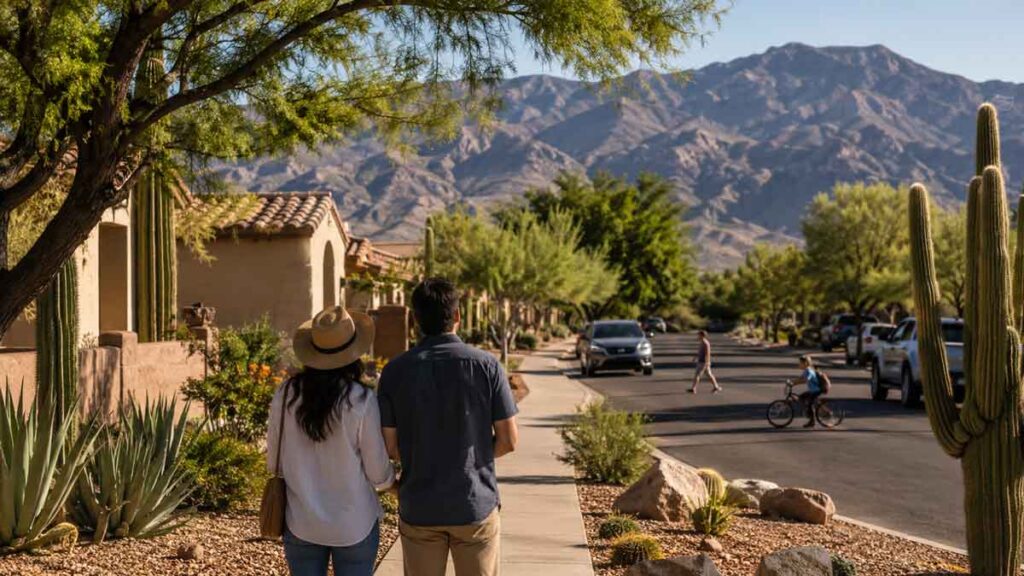
Choosing a home here involves more than prices and photos. With our guide, you’ll spot Hidden Factors Influencing Tucson Neighborhood Suitability that listings rarely mention. Those insights help you compare family friendly areas in Tucson and narrow the best neighborhoods in Tucson with confidence.
We’ll look at school and park access, after-hours sound, and how new projects reshape streets. Commute shortcuts, lighting, and weekend traffic can also change how safe and relaxed you feel at night. First, consider Local Climate Variations Affecting Comfort from foothills breezes to heat-trapping valley pockets.
Local Climate Variations Affecting Comfort
Local comfort in Tucson can shift block by block, even on calm, clear days. In family friendly areas in Tucson, these microclimates can shape daily routines and how comfortable outdoor spaces feel.
Elevation edges: Neighborhoods nearer foothills can feel somewhat different during late afternoon heat. Changes in elevation, exposure, and airflow can influence how warm an area feels.
Sky Island basin effect: Tucson sits in a desert basin surrounded by mountain ranges. That geography can influence airflow and evening cooling, particularly in lower areas where heat may linger.
Shade and surface temperature: Tree canopies reduce direct sun exposure on sidewalks and walls. Native vegetation can also make outdoor areas more comfortable, so pay attention to shade when exploring an area at different times of day.
Desert washes and airflow: Areas near washes can experience different airflow patterns as air moves through natural corridors. After a monsoon, changes in moisture and surface conditions can also temporarily affect how the area feels.
Heat stored in pavement: Asphalt and concrete absorb solar energy during the day and release it after sunset. This can make heavily paved areas feel warmer into the evening, particularly during hotter periods.
Proximity to Quality Schools and Parks
Daily comfort can feel obvious, yet long-term fit often hides in routines. Now you can weigh proximity to quality schools and parks for Tucson neighborhood suitability.
School boundary reality: School attendance zones can differ between nearby areas and may change over time. Confirm the current boundaries before touring, since the closest campus is not always the assigned school.
Walk and drive time: A ten-minute school run often beats a thirty-minute loop at rush hour. You can test routes around the time you expect to travel to spot real congestion.
Park access: Nearby parks, trails, and outdoor spaces can make it easier to build recreation into your weekly routine. Compare actual walking and driving distances rather than relying only on a map overview.
Neighborhood amenities: Parks can contribute more than recreation. Access to green space, playgrounds, walking paths, and community facilities can influence how convenient an area feels for different households.
Claxton Manor daily rhythm: Claxton Manor can provide a convenient home base for planning evenings around school, work, and outdoor activities. You can squeeze in homework help, then a quick playground stop, without adding unnecessary travel.
Noise Levels Beyond Main Streets
Noise Levels Beyond Main Streets can shape Tucson neighborhood suitability more than you expect. Side streets can still get cut through by commuters, delivery vehicles, and late-night activity. The overall sound level can also vary depending on nearby roads, businesses, construction, and the time of day.
Traffic noise generally becomes less noticeable as distance from a busy road increases, but building orientation, windows, landscaping, and surrounding structures can also affect what you hear. There is a jolt when a 5 a.m. garbage truck rattles a quiet cul-de-sac. When touring Claxton Manor, consider setbacks, window placement, and visiting at different times so you get a better sense of the indoor environment.
Future Development Impact on Community
Future development can shift daily convenience, traffic patterns, and community feel around Claxton Manor. You get better outcomes when you track zoning changes and planned projects early.
Policy signals: Local zoning and development policies can influence where new housing and other projects appear. Reviewing current plans can help you understand what may change near a potential home.
Middle housing pressure: Changes that allow additional housing types on existing lots can gradually increase residential density. That may bring more housing choices and support local services, while also changing parking, traffic, and neighborhood character.
Community development ripple effects: New housing and community projects can bring changes to nearby streets, services, and activity levels. Looking at project timelines and proposed uses can help you anticipate how an area may evolve.
Choosing a home in Tucson goes beyond price and curb appeal. Hidden Factors Influencing Tucson Neighborhood Suitability include wash flood risk, microclimate shifts, and evening light spill. You also benefit from checking cell coverage, internet reliability, and weekend traffic flow.
At Claxton Manor, you can weigh these details against commute time and lifestyle goals. When you tour, ask about maintenance response, parking patterns, and seasonal pests. Review the community information available online and match the right home to how you actually live.
Smart planning keeps surprises low after you sign your lease.